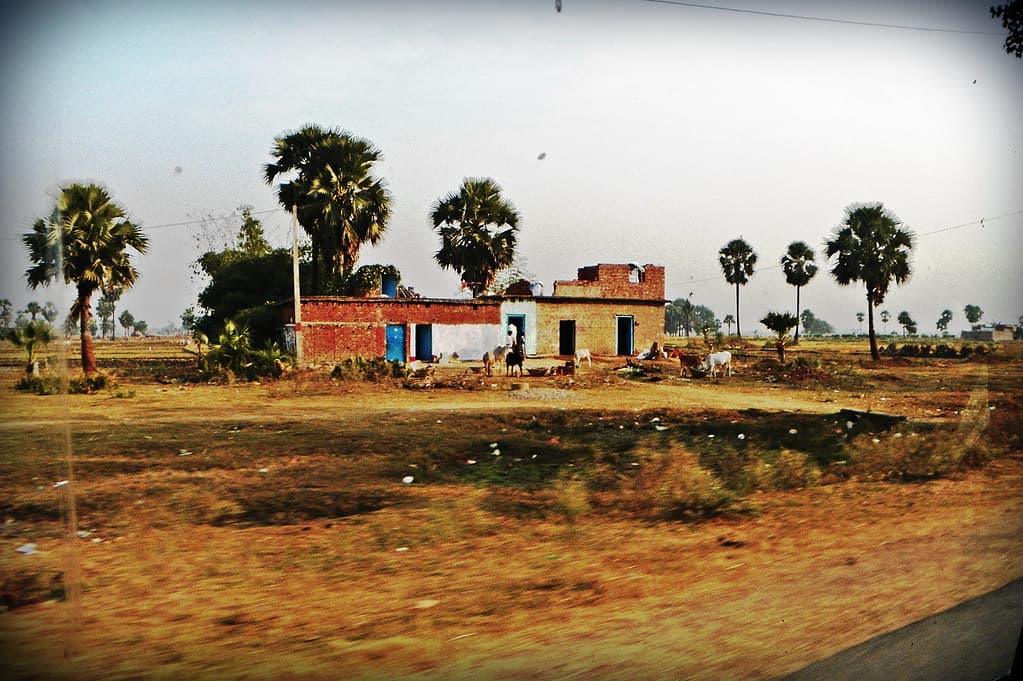
Vaishali district magistrate Varsha Singh issued an order on May 24 closing all government and private schools, pre-schools and anganwadi centres up to Class 8 from May 25 to May 31, with classes IX and X allowed at their schools' discretion as long as drinking water, shaded waiting and afternoon rescheduling are in place. Saran district has shut the same band through May 27. Patna, Gaya, Aurangabad, Nawada, Rohtas, Arwal and Jehanabad are all running at 40 to 42 degrees Celsius through this week, with the IMD's orange alert standing. Reporting from Vaishali and district summaries confirm a multi-district closure rather than one isolated order.
For Bihar parents, this is the start of a near-continuous shutdown. BSEB's scheduled summer vacation runs June 1 to June 20. Stitching the May 25 to 31 closure to the official break gives most families almost four uninterrupted weeks at home. The window is long enough that how it is used matters more than that it is happening.
What the order actually says
The closure is specifically for academic activities. It does not bar schools from being open for staff, library use, or supervised exam-prep slots for Classes IX, X and XII, provided the school has cooling and water arrangements. Anganwadi centres are shut for child attendance but the take-home ration distribution continues. The mid-day meal supply for primary students will follow the district administration's hot-weather protocol — most districts switch to dry rations or evening pick-up windows.
The order is not a CBSE order; it is a district-administration directive under the Disaster Management Act and the SDMA's heatwave SOP. That matters for one practical reason: it overrides any school-side calendar that says classes are running. Even a private CBSE school in Vaishali must comply with the DM's order on closure days for the affected grades.
The five things to put on the family calendar this week
One, confirm the order applies to your school in writing. Most schools have circulated the district order on their parent groups by now. If yours has not, ask. The closure is not optional and the school office should be able to share the dated notice. Where Classes IX and X are continuing at the school's discretion, ask specifically what the heat-management plan is: water, fans, classroom orientation, dispersal time. That is not paranoia — it is the SDMA's own checklist.
Two, plan the heat-of-day routine. Bihar's afternoon peak between 1 and 4 pm is what is shutting schools; the rest of the day is recoverable. Move physical activity, market runs and outdoor visits before 10 am or after 6 pm. Indoor academic work — reading, writing, revision — is best slotted to the cooler morning, with the afternoon kept for sleep, hydration and quiet activities. Even otherwise healthy children dehydrate fast in 42-degree afternoons.
Three, hydration and ORS at home. The Bihar State Disaster Management Authority's heatwave SOP recommends an ORS sachet, lemon-and-salt water, or buttermilk roughly every two hours through the day for children, with plain water in between. Sugary cold drinks are a poor substitute. A simple visual cue — a one-litre bottle per child to be finished by lunch and another by dinner — works better than tracking glasses.
Four, watch for symptoms. Heat exhaustion in school-age children shows up first as irritability, headache, dizziness, dry mouth, slowed responses or reduced urine output. Heatstroke — body temperature above 40, rapid pulse, hot dry skin, confusion — is a medical emergency and warrants the nearest hospital, not paracetamol at home. The Indian Academy of Paediatrics has a one-page checklist that families should print and keep on the fridge.
Five, use the academic window deliberately. Four weeks is a lot of unstructured time. The most useful pattern is a 90-minute morning study block, a project the child runs through the month (a reading log, a small science observation diary, a coding tutorial), and a 30-minute evening review. Anything more ambitious tends to collapse by week two. Anything less leaves the family scrambling on July 1.
For private schools and their parent groups
The pre-monsoon week is also when most Bihar private schools' tuition and transport fees fall due. The district closure does not change fee liability, but two practical asks are reasonable. First, transport fees for closure days should be pro-rated or credited — most schools have a heatwave policy already, even if it is not advertised. Second, online sessions for Classes VI to VIII, if the school is offering them, should be optional and short; eye strain in 42-degree afternoons is a real problem and a three-hour Zoom block is the wrong call.
For school administrators, the SDMA SOP also requires three operational items even during closure: water-tank chlorination check, transport AC and shading inspection, and a one-room cooling station available for any staff or student who needs it. The June 1 reopening assumption for some private schools is fragile in this weather; an updated calendar by Friday will save a fortnight of confusion.
How this fits the larger Bihar 2026 picture
The Bihar Board's planned summer vacation runs to June 20. Vaishali's order overlaps the first six days of that already-planned break and adds the May 25-31 closure on top. Saran's order is shorter but on the same logic. The MeetSchools North India summer-at-home brief from May 20 covered the UP, Delhi, Rajasthan and Telangana picture; Bihar is now the fifth state in that frame. For families with a Class IX or X student, the only academic question that matters this fortnight is what gets done between now and June 21 — when classes are scheduled to resume statewide and the new term properly begins.
The instinct after four heat-closure weeks is to fill them with worksheets. That is rarely the right call. The better calendar is one revision block a day, one book finished by the end of the month, and one outdoor early-morning activity that keeps the child's body clock close to where the school day will need it on June 21. The schools that come back to the cohort that has slept well, hydrated well, and read one book are the schools that recover the term in the first ten days. The schools that come back to a tired, distracted, screen-fatigued cohort spend the rest of June re-engaging.
For Bihar parents, the closure is not an emergency — it is a sensible administrative call given the temperatures. The next seven days are within the family's control. Plan them like a working week with a different shape, not a holiday, and the four-week window does what it is supposed to: keep children safe through the worst of the heat, and hand them back on June 21 ready to learn.