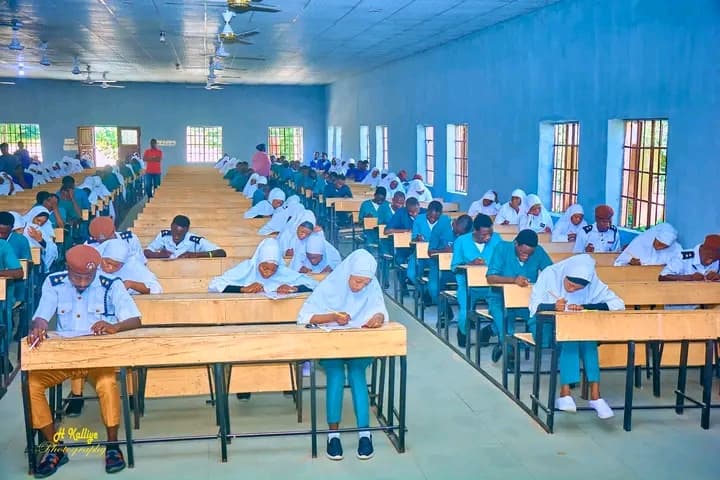
Today, May 21, is the last day of the CBSE Class 10 Phase 2 exam — the second of the two attempts the board introduced this academic year. Phase 2 ran from May 15 through May 21, with theory papers mostly held in the 10.30 am to 1.30 pm slot. Only candidates who appeared in Phase 1 — the February-to-March main exam — are eligible for the second attempt, and Phase 2 is treated as an improvement attempt rather than a separate academic year. Results are expected between June 5 and 10.
For families, the temptation today is to file Phase 2 away and start the summer. That misreads the window. Three weeks is just enough time to do four things well — and just enough time for a Class 10 family to lose a fortnight to anxiety and revisit none of them.
What Phase 2 actually changes
Phase 2 is a single-attempt improvement for up to three subjects. The better of the two scores is what appears on the final marksheet for each subject. That last sentence is the part most families miss. If your child's Phase 1 score in a subject was 78 and Phase 2 looks like 72, the 78 stays. There is no risk of going backwards. The risk is operational — keeping documents in order, knowing the verification calendar, and not making a Class 11 stream decision against the wrong number.
The single-best protection over the next three weeks is to write down, on one page, the Phase 1 subject-wise score, the subject(s) where Phase 2 was attempted, and the realistic upside for each. "Realistic" means the upside the child's own teacher would call possible — not the upside the WhatsApp group is promising.
Week 1: today through May 28
The first week is the rest week, and it should be one. Three things to put on the calendar in that order: a full day off, a low-pressure conversation about what the child themselves felt about Phase 2 (not what others said about the paper), and a 30-minute file audit. The file audit is the one most families skip. It means confirming you have, in one place: both Phase 1 and Phase 2 admit cards, the school's roll number sheet, the parent contact details registered with the board, and the child's Aadhaar. The verification window in June will assume you have all of these.
This is also the week to disengage from "answer key" content. Coaching institutes routinely publish unofficial answer keys within hours of each paper, and reading them now will not change anything. CBSE itself does not release an answer key for Class 10; the board publishes the official marking scheme only after the result. Comparing memory to a coaching key on May 22 is a great way to start a fight with a fifteen-year-old.
Week 2: May 29 to June 4
Week 2 is the planning week. The Class 11 stream conversation should happen here, with explicit acknowledgement that the final marksheet may move in two or three subjects. Most school admission cycles for FYJC, junior college and Class 11 in CBSE schools open windows in early-to-mid June; the worst time to make a stream decision is in the 48 hours after the result. The best time is a fortnight before, with a clearly stated "if-then" plan: if Maths is X, then Science; if Maths is below X, then Commerce with Maths; and so on.
This is also the week to read your child's school's Class 11 admission policy. Many CBSE schools admit on the higher of the Phase 1 and Phase 2 results but freeze the application window quickly. Confirm in writing whether your school takes the combined improved marksheet, what the cut-offs were last year, and whether sibling, alumni or board exam streams change the equation.
Week 3: June 5 to 10, result week
The result is expected in this window. Three rules for result day. First, the score the portal shows is provisional; the original marksheet from school is the document that matters. Second, no decision should be taken on the day itself other than to download and save the result PDF. Third, if your child wants to apply for verification of marks or a photocopy of the answer book, the window typically opens within a week of the result and runs roughly two weeks. The 2026 main result cycle for Class 12 set the precedent — cheaper photocopy and revaluation fees, narrower windows, and an On-Screen Marking system that has changed what verification can and cannot reveal.
Apply for verification only where the Phase 2 score is materially below the child's mock-test trajectory and the difference would change a stream decision. Apply for a photocopy where there is a specific concern — for example, an essay question or a long structured answer the child remembers writing in full. Skip both where the gap is one or two marks; the verification process does not re-mark answers, and the photocopy will not change a difficult-to-grade essay.
What to ignore over the next three weeks
Three things will dominate noise and should not change household decisions. First, "expected pass percentage" forecasts; pass-percentage averages have nothing to do with a single child's marksheet. Second, social-media topper reels from any board; they are selection effects, not patterns. Third, the rumour-mill estimate of when the result will land. CBSE will announce a date 24 to 48 hours in advance; until then, treat any timeline as speculative.
The conversation worth having tonight
Phase 2 is the most consequential change CBSE has made to Class 10 in a decade. The improvement attempt cushions a bad day but it also lengthens the season; many of this year's Class 10 students have effectively been in board mode since January. Tonight's conversation matters less for what it decides and more for what it closes. The child has done what they could; the household has done what it could; the next three weeks are a pause, not the verdict. The verdict is twelve months away in Class 11 and three years away in Class 12.
The point of the window is to enter June with a plan rather than an emotion.