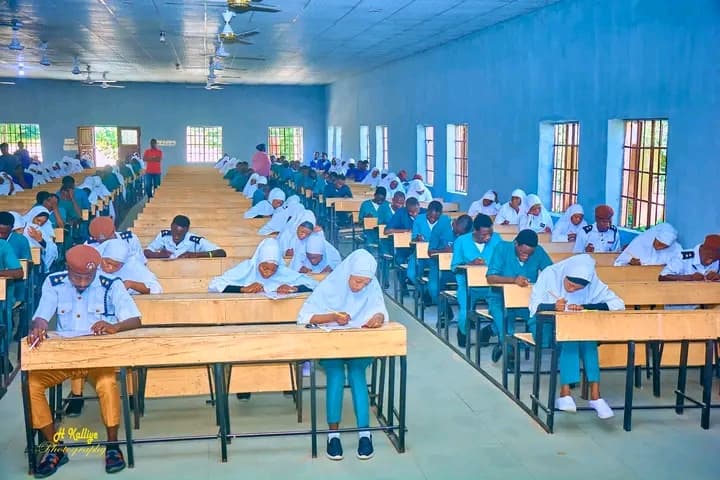
For the first time in CBSE history, Class 10 students will sit a second board exam in the same academic year. Phase 2 begins on May 15, 2026, runs through May 21, and gives students a structured second chance at up to three subjects. If you are a parent navigating this for the first time, here is what changes — and what does not.
What Phase 2 actually is
CBSE has split the Class 10 board examination for the 2026 academic session into two phases. Phase 1 took place between mid-February and early March; results are out. Phase 2 — sometimes called the "improvement exam" or the "second board exam" — is now an integrated part of the same cycle, not a supplementary or compartment exam held a year later.
A few things to be clear about:
- It is optional, not mandatory.
- It is treated as part of the same academic year, not a re-attempt the next year.
- Students can attempt up to three subjects in Phase 2.
- The better of the two scores is what counts on the final mark sheet.
- Internal assessment marks cannot be improved through Phase 2.
This is a meaningful departure from the old "one exam, one shot" model that defined CBSE Class 10 for decades. As Careers360 reports, the date sheet and exam pattern have been finalised and the List of Candidates (LOC) submission has been completed by schools.
Key dates and pattern
The Phase 2 exams are scheduled across one week:
- May 15: Mathematics
- May 16: English
- May 18: Science
- May 21: Social Science
All papers are conducted in a single shift, 10:30 AM to 1:30 PM. The question pattern, marking scheme, and syllabus mirror Phase 1 — there is no separate "improvement" syllabus. Per Shiksha, the registration fee starts at ₹320 per subject for students writing within India, payable through the school.
Who is eligible (and who is not)
Eligibility is narrower than many parents assume. To sit for Phase 2, a student must have:
- Appeared in Phase 1 in February–March 2026, and
- Been declared Pass or Eligible for Improvement in the Phase 1 result.
Students who were absent in three or more subjects in Phase 1, or who fall under the Essential Repeat (ER) category, are not eligible. Schools have already coordinated LOC submissions for eligible students, so if you are unsure of your child's status, the school office is the right first call — not CBSE directly.
Should your child take Phase 2?
This is the question most families are asking, and there is no universal answer. A few honest filters help.
When it usually makes sense
- The Phase 1 score in a key subject is materially below practice-test averages and the syllabus is still fresh.
- A specific score band matters for stream selection in Class 11 — for example, a Science stream cut-off at the same school.
- The student is in good academic and emotional health and is genuinely keen to re-attempt.
When it usually does not
- The student has already moved into Class 11 prep (JEE, NEET foundation, IB/IGCSE transition) and Phase 2 prep would crowd out the new syllabus.
- The expected gain is one or two marks. The downside risk is small because the better score is retained, but the opportunity cost of three weeks of focused prep is real.
- The child is genuinely burnt out. CBSE designed Phase 2 to reduce pressure, not multiply it.
A useful rule of thumb: pick subjects, not the whole set. The framework was built so families could target — for instance — only Mathematics or only Science.
What schools are doing differently this year
Phase 2 has quietly forced operational changes that parents may not see directly. Schools have had to publish dual academic calendars (one for Phase 2 candidates, one for everyone else moving to Class 11), open temporary doubt-clearing sessions, and in many cases coordinate teacher availability during the regular summer break window. The official notice is on the CBSE website, and schools have been asked to keep transitions to Class 11 on track even where Phase 2 candidates need additional support.
If your child is sitting Phase 2, expect short, targeted school-led revision blocks rather than full re-teaching. The goal is consolidation, not relearning.
Common myths to clear up
- "Phase 2 marks replace Phase 1 marks." Not automatically — only if they are higher. The mark sheet reflects the better of the two attempts.
- "Colleges and Class 11 admissions will see only Phase 1." Final mark sheets and certificates are issued after Phase 2 results, so the higher score will be what most institutions see.
- "Phase 2 is the same as a compartment exam." No. Compartment exams remain a separate process for students who failed; Phase 2 is for everyone else.
- "Internal assessment can also be improved." No. Only theory paper marks are reconsidered.
What this means for parents and students
Treat Phase 2 as a tool, not a default. The reform exists to lower stakes by spreading them — students no longer need to peak on a single February morning. But that only works if the family decides intentionally whether to opt in. For some students, sitting Phase 2 will materially change a transcript and a stream choice. For others, it will be a distraction from the next chapter that has already begun.
Above all, the result your child carries forward is the better of two attempts. There is no penalty for trying — and no reward for trying without a plan.
If you are starting to think about the Class 11 stream that follows, or comparing schools that handle Phase 2 prep differently, explore the school listings, parent reviews, and admissions guides on Meetschools.