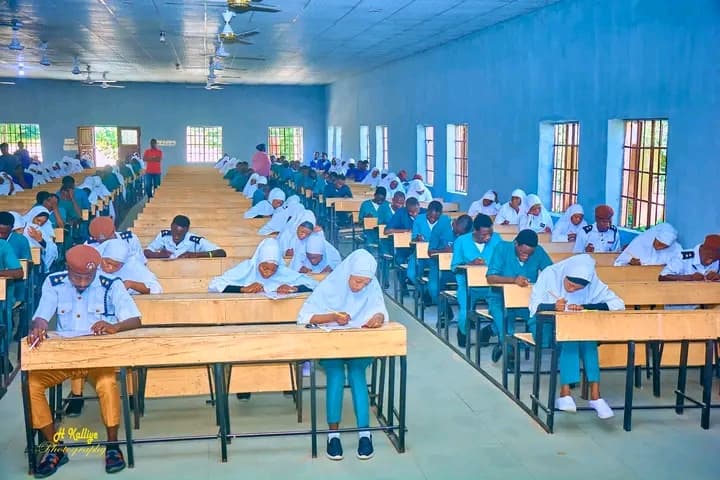
The CISCE has slotted the ICSE Class 10 improvement exam application window for May 30 to June 5 — a six-day stretch that lands the same week most ICSE schools across India hold their first staff meeting of the new academic year. The improvement exam itself is set for July 1 to July 14, with results expected by August 1. For ICSE Class 10 form teachers and exam coordinators sitting on the 0.82% of the cohort that did not pass and the wider band of students wanting to lift a single-subject score, the six days are short, school-controlled, and zero-tolerance on documentation. This is the working brief.
The 99.18% number — and the band it hides
CISCE declared the 2026 ICSE Class 10 result on April 30 at a 99.18% pass rate across 258,721 candidates and 2,957 schools, with girls at 99.46% and boys at 98.93%. The overall result release is the headline; the more useful number is the residual cohort the improvement exam exists for. Roughly 2,100 candidates nationally — about 0.82% — did not pass. A larger group, harder to count from public data, sits in the band of passed-but-disappointed: students who cleared the threshold but want to improve a single subject for Plus One stream eligibility, ICSE-Plus-Two trajectory, or a competitive scholarship application.
For a form teacher, those are two distinct conversations, not one. The compartment-style cohort needs a clear path back into Class 11 admissions before the window closes mid-July at most state-level Plus One systems. The improvement cohort needs a hard cost-benefit conversation before the school commits time on the form. Mixing them is the most common mistake of the early-June calendar.
The mechanics: a school-controlled, six-day window
The most important operational fact is that ICSE improvement registration is not a parent-to-board action — it is school-to-board. The school head or examination coordinator logs into the CISCE Career Portal at cisce.org and enters the candidate details and subject choices on the student's behalf. As CISCE-aligned reporting on the improvement process notes, students can appear for a maximum of two subjects, provided they have passed English and at least three other subjects. The fee is Rs 500 per paper, with two-paper subjects like English at Rs 1,000.
The teacher's window is therefore the school's window. Six days for: collecting consent letters from families, locking subject choices, paying through the school's CISCE-linked fee channel, and submitting the entry. June 5 is a hard deadline, not a soft one — there is no late-fee tier published for improvement entries.
A six-day plan for the form teacher
Day 1 (May 30): List your two cohorts separately. The compartment-style list comes off the result sheet; the improvement list comes from one-to-one conversations during the first staff week. A student who scored 85 in Physics but wanted 92 for the Plus Two stream is on the improvement list; a student who scored 33 and was held by the seven-subject pass rule is on the compartment list. Two registers, two desks, two timelines.
Day 2 (May 31): Send a single, board-language consent letter home for each candidate. Parents need to sign that they understand the fee, the subject cap (two subjects max), the July 1-14 exam window, and the August 1 result date that may collide with the start of Class 11. The letter should be returned by Day 3.
Day 3 (June 1): Hold a 30-minute group counselling slot for improvement-cohort students. The right question to ask each one is, "What does a 5-mark improvement actually buy you?" If the answer is "nothing concrete" — no scholarship, no stream gate, no admission lift — the improvement entry is wasted school effort. The compartment cohort skips this slot; their case is straightforward.
Day 4 (June 2): Lock subjects. Once a school enters a subject in the CISCE Career Portal, it is committed; the fee is non-refundable. The trap is the student who decides between Physics and Maths on Day 4 and switches on Day 5. Do not allow Day 5 changes without a written request and a head-of-school sign-off.
Day 5 (June 3): Pay. Schools settle the CISCE improvement fee through the same gateway used for the main exam cycle. Run a single batch payment with a spreadsheet that reconciles candidate-by-candidate; the back-office work is what protects you from refund disputes if a family withdraws in the last 48 hours.
Day 6 (June 4): Submit. Day 6 is the buffer, not the deadline. Submit on June 4 even if the window technically closes June 5. CISCE portals run their heaviest traffic on the final day, and an avoidable portal timeout has cost more than one school a candidate's entry.
The four questions a form teacher should pre-answer for families
"What if my child clears the improvement and the original marksheet is better?" CISCE retains the better of the two scores; the original is not invalidated. This is the answer parents most often need restated.
"Can my child sit the improvement exam from a different city?" Yes — the school nominates a centre during entry; the student may be allotted a centre in their current location if requested with documentation.
"What about Plus One admissions in our state?" Most Plus One systems — Maharashtra FYJC, Karnataka PU, Tamil Nadu HSC — will admit on the original ICSE marksheet first. The improvement result, if better, can be used for revaluation of the seat allotment but not always for a fresh allotment. The school should document the original allotment date for every student.
"Is rechecking different from improvement?" Yes. The rechecking process is a separate, narrower request against the existing marksheet; the improvement exam is a re-test. A student should not be doing both for the same subject unless the rechecking returned no change and the family still wants to sit the paper.
What to flag in the staff meeting
Three things worth a line in the agenda. The Aug 1 result colliding with the first month of Class 11 means form teachers will need to schedule a single follow-up window in early August for improvement-cohort students. The CISCE Career Portal has been deliberately small-batch — schools entering more than 25 improvement candidates have historically seen submission lags. And the fee non-refund line is the one that needs a head-of-school signature on every entry, not just a teacher's. Six days move fast. The brief is to enter every eligible candidate, lock no candidate twice, and leave the school with one register on Day 7 — the candidate list for July.