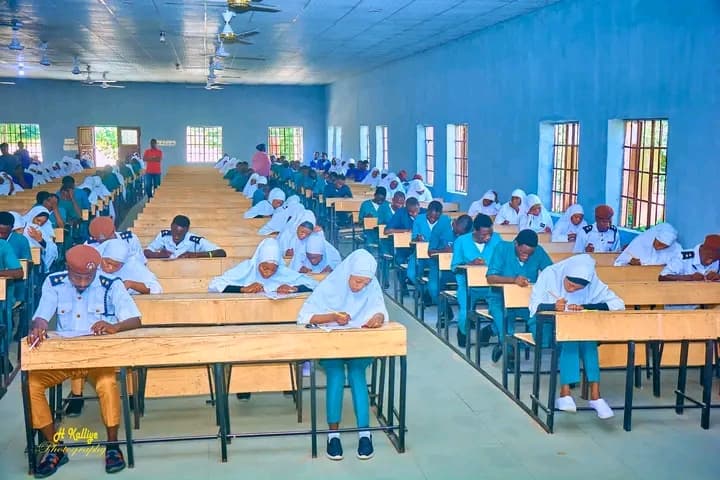
The headline from the latest LocalCircles survey, released this week, is uncomfortable to read on a school night. Eleven per cent of parents of private school children say their fees have risen more than 80% over the last three years. Another 22% put the rise in the 50-80% band. A further 3% report 30-50%, and 26% report 10-30%. The survey covered 22,443 parents across India, and the headline finding is that 7 in 10 of them say their school's fees have climbed by more than 30% in three years.
That sits in the same week as fresh protests by parents in Hyderabad demanding the Telangana government step in on unregulated hikes, and weeks of similar demonstrations through April outside Delhi Public School branches in Delhi and at gates in Bengaluru. The pattern is national; the responses are local. If you are an Indian parent planning the 2026-27 fee outflow, the headline can panic, but the underlying read is more useful than it sounds.
What the survey is actually measuring
The 30-80% number is a three-year increase, not an annual one. Compounded, that works out to roughly 9-22% a year — the high end is well above general inflation, the low end is within the band most schools quote as routine. The survey also says 9 in 10 parents feel their state government has not capped excessive hikes effectively, which is the political signal more than the academic one.
Two important caveats. First, the survey is self-reported. Parents who have seen sharp hikes are likelier to fill in a fee questionnaire than parents who have not, so the average is probably skewed high. Second, "fees" in the survey conflates tuition with the long tail — transport, lab kits, activity fees, ID cards, annual charges. That long tail is where most schools quietly add growth, and where the family-level cost story diverges from the school's public fee circular.
What is actually driving the headline
Three drivers, in roughly this order of weight:
- Teacher salary revisions. The Seventh Pay Commission analogue has worked through most affiliated school networks. CBSE's CPD push, mental health policy mandates, and the new R1-R2-R3 language framework all require staff. Schools recover this through fees.
- Capex on infrastructure tied to NEP and NCF-SE 2023. AI labs from Class 3, NCERT's Kaveri integrated reader, science upgrades for the Phase 2 board model — each generates a building or licensing line on the fee structure.
- Long-tail charges that were always there but are now itemised. Annual fees, security deposits, technology charges. Many schools that ran a single tuition line until 2022 now run six or seven.
None of this individually justifies 80% in three years. Cumulatively, in a few outlier schools, it does.
What the law actually allows
Most states have a fee regulation rule on paper, and very few implement it consistently. Tamil Nadu has the most operational framework, with a state committee fixing a band per school. Delhi has just brought in the Delhi School Education (Transparency in Fixation and Regulation of Fees) Act, 2025, with parent-representative committees coming into force from 2026-27. The Karnataka KASPA PIL we covered earlier this month is the legal route in that state. Maharashtra runs a Fee Regulation Act with PTA-level approvals. The Hyderabad protests are pushing Telangana to follow.
The practical implication: the legal frame is moving in the parent's direction, but slowly, and unevenly across states. The school cannot ignore a parent's right to a written breakdown of fees and an audit trail. It can, and often does, push back hard on the request.
The five conversations to have with your school this term
Numbers are useful only if they translate into questions you can ask. Five, in order.
- Ask for the three-year fee history in writing. A line-by-line of tuition, transport, annual, computer, activity. Not the brochure — the actual circulars. If the school refuses, the refusal is the answer.
- Separate tuition from the long tail. Compute the share of "non-tuition" charges in your last invoice. If it is over 35%, you are likely paying for things you cannot point to in the building.
- Ask which expenses the hike is funding. NEP labs, teacher pay revisions, infrastructure — each is legitimate and each is auditable. A school that cannot tie the hike to a specific cost is a school that is testing your tolerance.
- Find your state's PTA or fee-committee process. Delhi parents now elect five representatives to the School Level Fee Regulation Committee under the 2025 Act. Maharashtra's PTA-level approval has been on paper since 2011. Use it; do not just complain in the WhatsApp group.
- Plan the 2027-28 decision now, not when the next letter lands. The state board option, the lower-tier private option, even the relocation option — these decisions are made over twelve months, not twelve days. If the trajectory is unsustainable, start the conversation at the kitchen table this term.
The realistic frame for the rest of the academic year
The political pressure will keep building through the summer; expect at least one more high-profile protest in a major metro and at least one state government to announce a fee regulation review by August. The Supreme Court has consistently held that schools cannot charge fees as a precondition for retention, and High Courts have started ordering refunds in egregious cases. None of that changes the cheque you write next term.
The honest read of the May 2026 numbers is this: most Indian families paying private school fees are not seeing 80% hikes. A meaningful minority are. The political story will travel further than your particular fee circular will, but the work of holding your school accountable still happens at the level of one parent reading one fee structure on a printed page. That is where this term should be spent.