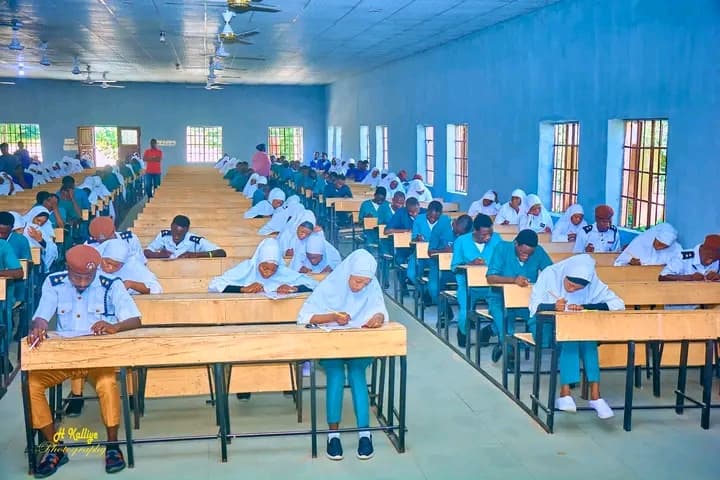
Karnataka's SSLC Exam 2 runs from May 18 to May 25, 2026, conducted by the Karnataka School Examination and Assessment Board (KSEAB). The exam is now in its established second cycle under the twice-a-year board model the state moved to in 2024-25. For thousands of Class 10 families across the state, it is the most consequential eight days of the academic year — and one of the least understood.
The window exists because Karnataka, like CBSE, has separated the question of "did you clear Class 10" from the question of "is your Class 10 score representative." Three distinct cohorts have a reason to sit Exam 2, and the right preparation, fee structure, and outcome expectation is different for each. Here is the working frame.
Who actually benefits from Exam 2
The board allows four categories to register: students who failed one or more subjects in Exam 1, students who passed but want to improve their score, candidates who were absent in Exam 1 for medical or other reasons, and previous-year students who never cleared SSLC. The dynamics in each group are different.
For students who failed one to three subjects, Exam 2 is a clearance exam, not an improvement exam. The realistic target is to cross the 35% subject minimum, not to optimise overall percentage. The case for sitting it is strong unless the student is moving to NIOS or to an open school stream; for a child planning to enter Class 11 in any Karnataka PU college on the standard merit track, Exam 2 is effectively the only path to a clean SSLC pass for this academic year.
For students who passed Exam 1 but are sitting Exam 2 for improvement, the picture is harder. Empirically, improvement-candidate score deltas across Indian state boards run a 5–12 mark range on a single subject, and the higher end of that delta requires both a targeted gap (a known weak topic) and four to six weeks of focused prep. Eight days of revision will, in most cases, swing scores by three to seven marks on a single paper. Whether that is worth ₹448 to ₹752 in fees and the disruption to summer plans depends on whether the marginal points actually unlock a PU college, scholarship, or category move.
For absentees from Exam 1 — usually for genuine medical reasons — Exam 2 is the natural first attempt, and the prep should mirror what would have gone into Exam 1, not a compressed re-revision. For previous-year repeaters, the picture is closer to the failure-clearance cohort.
The registration mechanic, and why it matters
One administrative detail that catches families out: students cannot register directly with the board. As KSEAB's process makes clear, the application must be submitted by the school. The Headmaster or Headmistress uses the school's official login on the KSEAB portal to upload the student's details, fee receipt, and subject list. Improvement candidates, private students, and repeaters pay the prescribed fee: ₹448 for one subject, ₹559 for two, and ₹752 for three or more.
The implication for families: any administrative delay in coordinating with the school cuts directly into the eight-day prep window. If your child plans to sit Exam 2, the action item for this week is not revision — it is confirming that the school has uploaded the application and that the fee has been remitted. Many schools run their last working day on the Saturday before the exam, so the practical deadline is earlier than the printed one.
The eight-day plan that works
One reason improvement-exam outcomes underwhelm is that students approach the prep window as a mini-version of the original board prep. It is not. The architecture should be different.
Days 1 and 2 are diagnostic. Go back to the Exam 1 answer script — every Karnataka SSLC candidate is entitled to a scanned copy via the KSEAB portal — and identify the three specific topics where marks were lost. Not the chapter; the topic. Most score loss in SSLC is concentrated in two or three sub-topics per subject, and the rest of the syllabus is at a respectable baseline that does not need re-revision.
Days 3 to 6 are surgical revision on those three sub-topics, plus three to five solved-paper attempts under timed conditions. The solved papers do more work than fresh study material at this stage. Days 7 and 8 are rest, a full sleep cycle, and one final paper attempt the day before each subject exam.
Two things to deliberately not do. Do not start a new reference book; the conceptual framework is now anchored to the textbook the student used originally. Do not switch tutors or coaching for the eight-day window; the marginal value of a new voice is negative under exam-week stress.
What schools should do this week
The window for school action is short. Three things on the principal's desk before May 13. First, confirm the Exam 2 candidate list and KSEAB upload status with one named coordinator, so no candidate falls through. Second, set up two timetabled revision sessions — one diagnostic, one paper-attempt — and clear teacher rosters for them. Third, write to parents of Exam 1 candidates who scored below 50% in any subject, recommending the improvement exam where applicable; many of those families will not have thought of it as an option, and the principal's nudge is consequential.
For schools running both SSLC and CBSE Class 10 sections, this is also the right moment to brief Class 10 form teachers on the parallel CBSE Phase 2 model that begins May 15 with 6.68 lakh students registered. The structural logic is similar across boards now, and Karnataka teachers will see the question come up in parent meetings.
Results, and the timeline beyond
KSEAB will declare Exam 2 results in June 2026 on karresults.nic.in, with the standard scanned-copy and rechecking windows opening shortly after. For families with a PU college admission riding on the outcome, that timeline collides with PUC admission rounds in some districts — worth checking the target PU college's policy on conditional admission against pending Exam 2 results before the result is out.
One frame for the family conversation tonight. Exam 2 is not a second chance because the first one went wrong. It is part of how Karnataka's Class 10 now works — a structural feature, not a fallback. The student who sits it is not a failure; the student who sits it well-prepared, with three named topics to fix and a clear eight-day plan, has the highest probability of converting the next stage of the year cleanly.