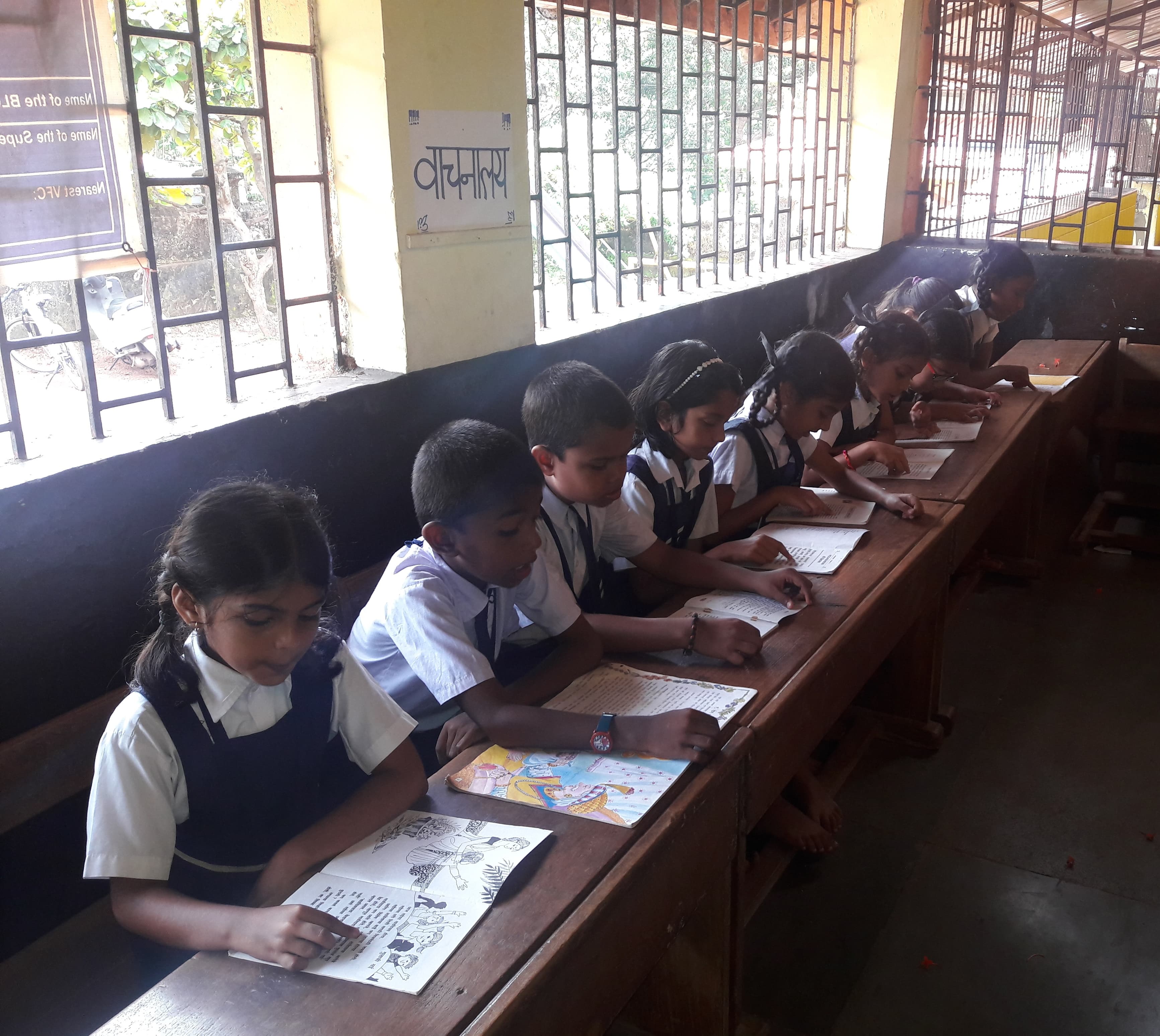
Tamil Nadu's school year is restarting on a split schedule. The state government has confirmed that all schools across Tamil Nadu reopen for the 2026-27 academic session on June 1, 2026, but Classes 1 to 3 will not actually begin until June 4. The three-day gap is being used for a mandatory orientation programme for primary teachers on a new foundational curriculum and on the nine new textbooks that Education Minister Rajmohan released earlier this month.
For families with children in Classes 1, 2 and 3, the next eight days are not a holiday extension. They are the last working week before a foundational stage that is being deliberately rebuilt around activity-based learning. Here is what that actually means at home, and what to do before June 4.
What is changing in Classes 1 to 3
The Tamil Nadu School Education Department has launched nine new textbooks for the foundational years, built on a child-centric framework that draws on the National Education Policy 2020 and the National Curriculum Framework for School Education 2023. The books are designed to move foundational instruction away from rote memorisation and toward stories, songs, motor-skill activities, social and emotional learning, and small experiential tasks. Free Press Journal reports that the nine titles together prioritise activity-based structures and personality development, with stories and songs interleaved with motor-skill work and moral education.
The bigger structural shift is that the books assume a different kind of classroom. Teachers will be expected to run more circle-time, peer-talk and play-based work, with paper-and-pencil tasks shortened. This is why the state has scheduled the mandatory primary teacher orientation from June 1 to June 3, before the children return on June 4. The orientation is not optional and is being treated as a precondition for teaching the new books.
The eight-day calendar in plain terms
This is the working week most TN parents now have:
- Today through May 31 — last few days of the summer break. Use them to settle sleep, screen-time and lunch routines. The new books expect a child who can sit and listen for short stretches; the holidays are usually unkind to that.
- June 1 to June 3 — Classes 4 and above reopen. Primary teachers are in orientation. Many private schools have synchronised their primary stage to the same dates, but a few are running their own pre-class workshops; check the school's circular.
- June 4 — Classes 1 to 3 begin. Many schools are planning a short orientation morning rather than full academic teaching on day one. Expect a half-day for the first two or three days.
- By June 10 — books should have been distributed and the new term routine should be visible.
What parents of Classes 1 to 3 should actually do this week
The instinct to over-prepare is strong, especially with a "new curriculum" headline. Resist most of it. Four things matter.
1. Do not buy parallel textbooks or workbooks yet. The state's nine new titles are designed to be self-contained for foundational learners. Most parallel publisher workbooks on the market right now were written for the old syllabus and will pull your child back toward rote drills the new books explicitly move away from. Wait two weeks after term begins, then see what the class teacher actually recommends.
2. Reset the routine, not the academics. A child who has not woken up before 8 a.m. for a month will struggle on day one regardless of what the textbooks say. Push wake-up to school time by Friday, May 29. Reintroduce sit-down meals. Wind down screens an hour before bed. None of this is glamorous, but it is what makes the first week not feel like a punishment.
3. Read the school's reopening circular twice. Tamil Nadu's calendar is officially uniform, but private schools have local variations — a few are still treating June 1 as the start for Class 3, and a few are running their own activity-based workshops in the gap. The phone-message group is rarely the source of truth here. The PDF circular is. If you have not received one by May 30, write to the class teacher and ask.
4. Talk to the child about June 4, not about the new books. The right pitch is "school starts again, your friends will be there, you have a new teacher to meet." The new curriculum is the school's job to introduce. Parents who arrive at the gate explaining stories-and-songs pedagogy tend to make a six-year-old anxious about being assessed on a framework they were not assessed on before.
What to ask the school in week one
Once classes start on June 4, three questions are worth raising at the first PTM or in a short note to the class teacher. First, when will the books physically reach the child — Tamil Nadu's distribution has hit the schools, but the chain to the child can stall in week one. Second, how will the year-end assessment look — the new books are designed for continuous, internal, activity-based evaluation, and many TN schools are still adapting their report-card format. Third, what does the day-one routine look like for the first fortnight — half-days, water-bottle policy, snack times, and pick-up. DTNext's report confirmed the books were formally released by the Minister earlier this month, so schools have had the better part of a month to plan distribution; the well-run ones will already have the chain in place.
The wider context
Tamil Nadu has stayed outside the centre's PM SHRI scheme for most of the last three years, and it has consistently treated its state syllabus as a parallel reform track rather than a centralised CBSE/NCERT pull. The new Classes 1 to 3 books are visibly that — they read like the National Curriculum Framework 2023 has been absorbed and re-expressed in a Tamil-medium-first idiom, with strong emphasis on motor skills, oral storytelling and social-emotional learning. For TN families, this is a moderately big curriculum moment for the youngest learners. For older grades, the next big change is the new state syllabus rolling forward through subsequent classes in the years ahead.
The honest summary for a TN parent of a Class 1, 2 or 3 child this week is short. The textbook is new. The classroom is being deliberately reorganised. The teacher is being retrained. None of that is something to study at home. The job at home is the dull, useful one — sleep, breakfast, school bag, and a calm child at the gate on the morning of June 4.