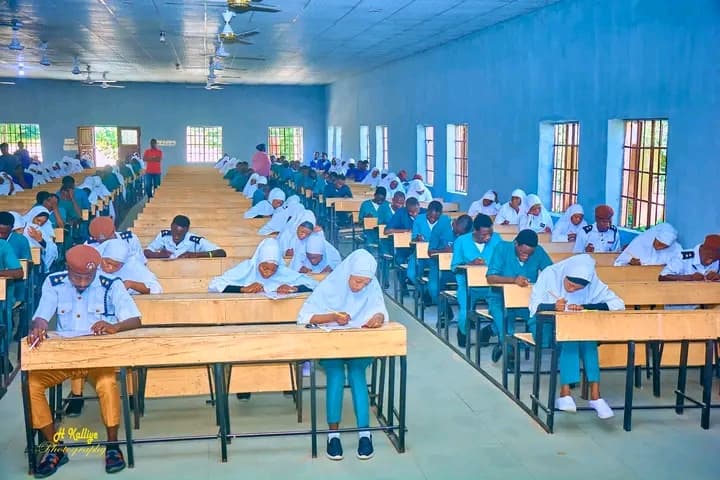
The Directorate of Government Examinations, Tamil Nadu declared the SSLC Class 10 result for 2026 at 9:30 am today on tnresults.nic.in. Overall pass percentage came in at 94.31%, half a point above last year. Girls finished at 96.47%, boys at 92.15% — a 4.32-point gender gap. 5,171 schools scored 100%, and the provisional marksheet link activates on May 22 with the photocopy of answer-sheet window running May 22 to 27. The supplementary exam dates have been notified alongside.
For TN Class 10 form teachers, section heads, and the senior leadership team that owns the Class 10-to-Plus One bridge, the marksheet is the easy part. What follows over the next fortnight — the photocopy decisions, the supplementary cohort planning, the Plus One stream conversation — is where good schools convert today's result into next year's outcomes. Here is the working brief.
What the headline actually says about your classroom
The 94.31% number is a state aggregate. Useful as a benchmark, dangerous as a yardstick. Three sub-numbers matter more for what you do this fortnight.
The 4.32-point gender gap is the one most teachers will reach for first. It is real, it has tightened slightly from the 2025 spread, but treating it as a single phenomenon is a mistake. Look at where in your subject the gap sits. In most TN schools the boys-girls gap is widest in languages and second-language Tamil or Hindi, narrower in core science, and effectively closed in mathematics for the top quartile. Your remediation roster for the supplementary window should be built bottom-up from where your boys actually lost marks, not from the headline gap.
The 5,171 schools at 100% number is the second one to read carefully. As Careers360's coverage notes, the 100% schools count is up from 2025 and concentrates in private aided and a section of high-performing government schools. If you are in this group, the operational question shifts from remediation to consolidation — which Class 9 cohort coming up next month is at risk of pulling the streak. If you are not, the more honest read is that ~5% of your candidates need a planned six-week intervention, not a "study hard" email to parents.
The third sub-number is the subject-wise pass distribution. TN's pattern over the last three cycles has been Tamil and Social Science holding the highest pass rates, English and Mathematics holding the median, and Science (especially Physics-heavy questions) holding the lowest. If your school's pattern deviates sharply from this, you have a teaching-and-assessment alignment issue, not a student-effort issue.
The photocopy and revaluation window: May 22 to 27
The photocopy of answer sheet application window opens May 22 alongside the marksheet activation, with the last date May 27. Per the official notification summarised by Shiksha's reporting, the revaluation and retotalling timelines follow soon after.
Your job as a form teacher is not to push every borderline student into photocopy. The honest decision tree is:
- Student is within 2 marks of the next grade boundary AND has a consistent classroom record above that boundary in the same subject: photocopy is worth it.
- Student has failed a subject by 3 marks or fewer with strong internal assessment: photocopy and apply for revaluation in that subject only.
- Student has failed by more than 8 marks or has uneven internal performance: do not chase a recheck. Plan for the supplementary window.
- Student is at a 90-plus aggregate but is contesting one specific paper: photocopy that one paper. Revaluation across subjects rarely changes the headline.
The most common form-teacher trap is encouraging a class-wide photocopy push to "be thorough". It clogs the school administrative load and dilutes attention from the students who actually need it.
The supplementary cohort: who is it really
The SSLC supplementary window will reopen in the months ahead for students who could not clear one or more subjects. Build your supplementary cohort now in three layers.
Layer one is the genuine fail cohort. These students need a structured six-week revision plan that focuses on the one or two specific topics that consistently break them — usually two chapters in Mathematics and one in Science. A blanket "study the whole book again" instruction is the most common reason students fail twice.
Layer two is the borderline-pass cohort that should consider improvement. The decision here is harder. For most TN Plus One transitions, a Class 10 aggregate above 80% is competitive; below 60% restricts Science stream access at most government higher secondaries. If your borderline student wants Science but holds a 55% aggregate, the supplementary attempt is a calculated bet, not a no-brainer.
Layer three is the absentee cohort — students who could not sit the exam due to medical or family reasons. Their plan is logistical, not academic. They need exam centre allocation, hall ticket support, and a working schedule that re-orients them to a paper-pattern they have not seen for three months.
The Plus One stream conversation
The TN SSLC result lands two weeks before most government and private Plus One admissions in the state move into active phase. Your form-teacher conversation with families over the next 10 days is the single most consequential career conversation many of these students will have this year — and it is the one teachers most frequently outsource to "let them decide".
Three principles for the conversation.
First, the stream conversation is not a marks conversation. Use the Class 9 subject preference indicators and the Class 10 internal assessment papers as a stronger signal than the SSLC aggregate. A student with 88% in SSLC but consistent struggle with Class 9 Physics is not a Science student.
Second, the Commerce stream is undersold in most TN schools. With CA, ACCA, and the new analytics-heavy commerce pathways visible to families through college admission cycles, the old "Commerce is for students who could not do Science" frame is now actively hurting students who would do well in it.
Third, the Vocational pathway is genuinely underused. TN has been expanding its skill-based Plus One tracks under the NEP rollout. For students in the 55-70% band with a clear interest area, this is often the right call — but it is the call families resist most, and the one where teachers' steady framing matters.
What to put on your calendar this week
By the end of May 22: complete the form-teacher review of the section's marksheets, build the photocopy-recommend list, and circulate it to families with a one-line per student rationale.
By May 27: support the photocopy applications for the recommended students. Begin one-on-one Plus One stream conversations with the top quartile.
By June 5: complete stream conversations across the section. Build the supplementary cohort plan. Hold a section parent meeting to align the home and school revision schedules for students in the supplementary cohort.
By June 15: complete the Class 10 form-teacher handover note for the next cohort, with a one-page diagnosis of the two subject areas where this section underperformed and what should change in Class 9 teaching to fix it before next year.
The state aggregate will be in the newspapers for two days. The work that turns this result into a better classroom in 2026-27 starts this week, and most of it happens at the form-teacher level — not the administration's.